
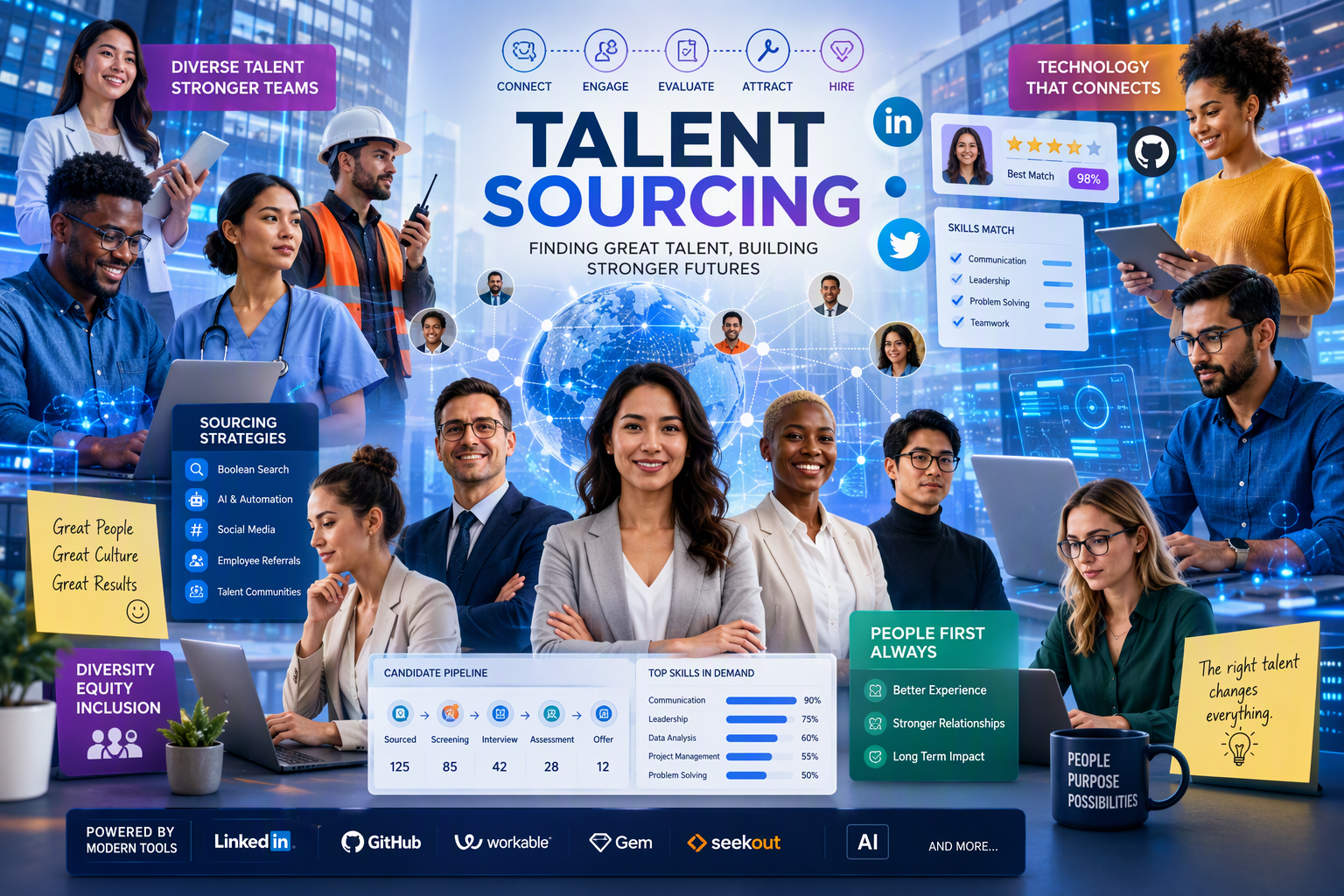
Key Highlights
Talent sourcing helps you reach people before open roles become urgent.
In 2026, strong talent acquisition depends on faster candidate sourcing and better pipeline planning.
AI sourcing and modern sourcing tools can improve search speed, matching, and outreach.
Passive candidates, referrals, and internal mobility can strengthen your talent pipeline.
Social media, job boards, and alumni networks each support different hiring goals.
The best results come when talent sourcing is measured, repeated, and aligned with business needs.
Introduction
Talent sourcing is no longer a side task for busy recruiting teams. It is a core part of talent acquisition because the best hires often are not actively applying. If you wait until a role opens, you may already be behind. A stronger approach is to identify and engage qualified candidates early, build trust over time, and keep a warm pipeline ready. That shift helps you hire faster, improve quality, and stay competitive in a crowded market.
Top 10 Talent Sourcing Techniques for 2026
The most effective candidate sourcing methods in 2026 are proactive, data-informed, and easier to repeat. You need sourcing tools that help you find people faster, but you also need a process that keeps outreach personal. That balance matters when you are trying to reach top talent before competitors do.
What works best today? AI sourcing, referrals, social media, alumni outreach, and skills-based searches all improve the recruitment process. The ten techniques below show how to widen your reach, improve response quality, and build a more reliable hiring engine.
1. Leveraging AI-Powered Talent Platforms
AI sourcing has changed how fast teams can search, rank, and reconnect with people. Instead of manually scanning thousands of profiles, you can use sourcing tools to surface qualified candidates based on skills, location, experience, and role fit. That saves time and gives talent acquisition teams broader reach.
Several platforms stand out in 2026 based on the compiled information. LinkedIn Recruiter remains strong for passive talent. ATS platforms such as Greenhouse, Workday, and SAP SuccessFactors help rediscover past applicants. Phenom supports Talent CRM, AI matching, interview scheduling, and internal mobility workflows. These tools improve speed across the hiring process.
Still, software should not replace human judgment. AI works best when recruiters review matches, refine criteria, and personalize outreach. If you want better results, use AI to reduce repetitive work while keeping people in control of candidate decisions.
2. Building Proactive Talent Pipelines
A proactive talent pipeline gives recruiting teams a head start. Instead of reacting to each vacancy, you identify best candidates early and keep relationships active. This matters most for hard-to-fill roles, recurring jobs, and specialized hiring where passive candidates often outperform active applicants.
Start with your existing systems. Review silver medalists, former applicants, internal employees, and alumni before going outside. Then segment talent by skills, seniority, location, and engagement level. This makes your pipeline easier to manage and helps lean teams focus their time where it counts.
For a practical 90-day approach, spend the first month defining role patterns and building segmented lists. Use the second month for personalized outreach and re-engagement campaigns. Use the third month to nurture warm prospects, track response trends, and refresh lists weekly. Small steps, repeated consistently, build a dependable pipeline.
3. Utilizing Social Media Recruiting Strategies
Social media now plays a direct role in modern talent acquisition. It is not only a branding channel. It is also where many professionals discover companies, assess culture, and decide whether to respond. For passive talent, that first impression can matter more than the job description itself.
LinkedIn Recruiter is especially useful for senior professionals and targeted outreach. Other platforms can support different audiences, including early-career and hourly talent. Behind-the-scenes content, employee stories, and role-specific updates can improve candidate engagement and make your employer brand feel more credible.
The key is consistency. Your sourcing message, careers page, and public social presence should match. If your outreach sounds personal but your online presence feels generic, response quality may drop. Social media works best when it supports trust, relevance, and a clearer view of what working with your team feels like.
4. Employee Referral Programs for Quality Hires
Employee referrals remain one of the most efficient ways to find quality candidates. Referred hires often ramp faster, align better with team expectations, and stay longer. For lean companies and startups, that makes referrals a practical part of talent acquisition, especially when budgets are tight.
To make referrals work, keep the process simple. Share clear details about open roles, explain what good looks like, and involve hiring managers early so employees understand the target profile. Reward tracking systems and referral campaigns can also increase participation without adding much manual work.
This method is especially useful when time matters. Instead of searching from scratch, you tap into trusted networks that already understand your company culture. Referrals should not replace other channels, but they can give you a warmer starting point and a more reliable path to stronger hires.
5. Engaging Passive Candidates with Personalized Outreach
Most top talent is not applying to jobs every week. That is why passive candidates are central to modern candidate sourcing. They may be open to the right move, but only if the outreach feels relevant, respectful, and worth their time.
Personalization improves candidate engagement and response rates. Mention a candidate’s work, skills, project history, or shared connection. Show why the role may fit their background instead of sending a broad message. Even with AI support, each message should sound informed and human.
You also need patience. Not every strong prospect is ready today. A thoughtful follow-up cadence, useful updates, and occasional check-ins can keep passive candidates warm without pressure. In a competitive market, that steady relationship-building is often what helps companies attract top talent before others do.
6. Skills-Based Sourcing and Assessment Tools
Skills-based sourcing focuses less on titles and more on proven ability. That matters because many candidate profiles do not match a job description perfectly, even when the person can do the work well. This approach helps teams find stronger matches and reduce missed opportunities.
It is especially useful for technical roles. Instead of filtering mainly by years of experience or degree requirements, sourcing strategies can include coding assessments, project history, portfolios, certifications, and demonstrated skills. Platforms like GitHub, Stack Overflow, Behance, and ATS records can all support this search.
The benefit is a wider and often more accurate pool. Skills-based methods can surface people who traditional title-based searches miss. They also support a fairer process because you are looking more closely at capability. When combined with assessments, this approach can improve role fit and shortlist quality.
7. Internal Mobility and Alumni Networks
Talent sourcing in HR means proactively identifying and engaging people for current and future needs. That includes external prospects, but it also includes your existing talent pool. Internal mobility is often one of the fastest ways to find the right fit because these candidates already know the business.
Recruiting teams should review internal employees before launching a full external search. Talent marketplace tools can help surface employees ready for lateral moves, promotions, or cross-functional work. This saves time, supports retention, and gives best candidates a reason to grow without leaving.
Alumni networks add another strong option. Former employees already understand your culture and processes, so boomerang hires can onboard faster. If you keep alumni connected through updates and outreach, you create a warm source of talent that often delivers speed and familiarity at the same time.
8. Targeted Job Boards and Aggregators
Job boards still matter, especially when you need scale. Broad platforms help with active applicants, while niche boards cut through noise for specialized roles. In a crowded talent market, targeted posting can improve visibility and bring in more relevant potential candidates.
Use general job boards for volume hiring and niche communities for focused skills. Stack Overflow can support developer searches, while creative and industry-specific platforms help narrow by craft. These sourcing tools work best when postings are current, keyword-aware, and written with a clear value message.
They are not just for active seekers, either. Passive candidates sometimes watch these spaces even if they are not applying today. A visible, well-written role can still spark interest. The key is choosing channels based on role type, not habit, and reviewing performance regularly.
9. Diversity-Focused Sourcing Initiatives
If diversity is not built into your sourcing strategies, the same patterns often repeat. Hiring teams need to choose channels, language, and outreach methods that widen access instead of narrowing it. That gives you a broader mix of qualified candidates and a healthier long-term pipeline.
Inclusive job posts are one part of the solution. So is reaching underrepresented talent pools, tracking representation across the funnel, and using structured evaluation methods. Skills-based sourcing can help here too by reducing overreliance on narrow background filters that overlook strong people.
This work also shapes company culture. Candidates notice when inclusion looks intentional rather than performative. In a competitive market, that can improve trust and make your organization more attractive. Diversity-focused sourcing is not a separate project. It is a better way to build stronger teams.
10. Creative Offline Recruitment Campaigns
Not every strong sourcing idea starts online. Creative offline campaigns still work, especially for local, specialized, or community-based hiring. Industry events, campus programs, job fairs, and invite-only mixers can help you meet people who may not respond to digital outreach alone.
These efforts also strengthen your employer brand. When candidates meet your team in person, they get a clearer sense of values, energy, and expectations. That can make later outreach warmer and improve the recruitment process by creating familiarity before interviews start.
For open roles that depend on trust or local presence, offline activity can be especially effective. It also gives HR teams more ways to stand out in a crowded hiring process. The best creative tactics are simple: show up where the right people already gather and start real conversations.
Defining Talent Sourcing in HR for Bangladesh
Talent sourcing is the proactive process of finding, engaging, and nurturing people before an opening becomes urgent. In HR, it sits at the front of talent acquisition and focuses on building a talent pool for both current and future hiring needs.
For Bangladesh, the same principle applies. Candidate sourcing is most effective when companies stop waiting for applications and start building relationships earlier. That approach gives hiring teams a better chance of reaching the right talent before competitors move first.
Understanding the Role of Talent Sourcing
Talent sourcing in HR is a proactive function focused on identifying, attracting, and nurturing potential candidates before roles open. It is different from simply posting jobs. The goal is to keep a steady flow of possible hires ready for the business when demand appears.
For hiring teams, this changes the rhythm of the recruitment process. Instead of rushing when a vacancy goes live, they can begin with a pipeline that already includes warm prospects, former applicants, referrals, and internal talent. That reduces pressure and supports better decisions.
It also improves candidate experience. People respond better when communication is thoughtful and timely rather than rushed and transactional. When done well, talent sourcing helps companies reach best talent earlier, maintain stronger relationships, and create a hiring process that feels more organized from the start.
Differences Between Talent Sourcing and Traditional Recruitment
The biggest difference is timing. Talent sourcing starts before an opening is urgent, while traditional recruitment usually begins after a role is approved. That means sourcing is proactive, and traditional recruitment is more reactive within the hiring process.
Candidate sourcing also focuses heavily on passive talent. Traditional recruitment tends to work more with active applicants who already entered the funnel. Sourcers build lists, segment talent, personalize outreach, and keep people warm. Recruiters then manage screening, interviews, and offers for right candidates.
There is also a difference in success measures. Talent sourcing looks at pipeline quality, engagement, and future readiness. Traditional recruitment often focuses on time-to-fill and immediate conversion. Both matter, but sourcing protects you from starting cold every time a new role appears.
Essential Talent Sourcing Channels in 2026
No single channel can cover every hiring need. Strong talent sourcing in 2026 depends on using different sourcing channels for different candidate types, skill sets, and locations. That mix helps you build a healthier candidate pool and avoid relying too much on one platform.
Online tools bring reach and speed. Offline methods add trust and local visibility. Together, recruiting tools, internal databases, referrals, and job boards create a sourcing system that is more resilient and easier to optimize over time.
Popular Online Sourcing Platforms
Several online sourcing tools continue to stand out in 2026 because they serve different needs well. LinkedIn Recruiter is a strong choice for passive professionals and targeted outreach. Indeed supports large volumes of active candidates, especially for frontline and high-volume roles.
For technical hiring, Stack Overflow and GitHub help teams go beyond resumes. You can review contributions, project history, and activity signals that a standard job description may never show. That makes these platforms useful when you need deeper proof of skill.
Your ATS and Talent CRM also count as online sourcing platforms. They store candidate profiles you already know, including silver medalists and previous applicants. Re-engaging those people is often more efficient than starting from scratch. The best platform mix depends on the role, not the trend.
Best Offline Channels for Talent Discovery
Offline candidate sourcing still adds value, especially when roles are local, high-volume, or relationship-driven. Career fairs, campus events, community partnerships, and industry meetups let you meet potential hires face to face. That can speed trust and make later outreach more effective.
For startups, these channels can be efficient when used selectively. You do not need a large budget to attend a focused event or partner with a training institution. Recruitment agencies can also help for urgent or specialized hiring, though they should be used with clear role priorities.
The real benefit is context. Offline conversations give recruiters and hiring managers a fuller sense of interest, communication style, and fit early in the hiring process. Used well, these channels support stronger local visibility and complement digital recruiting tools rather than competing with them.
Building a 90-Day Talent Sourcing Plan for Lean Teams
Lean recruiting teams need a simple talent sourcing plan they can repeat without burning out. The best approach is not to chase every channel at once. It is to create a focused sourcing process with clear weekly actions, a small tool stack, and steady pipeline management.
Start with role priorities, then build from internal records, referrals, and passive sourcing. Add only the channels that match your hiring patterns. A 90-day plan works best when it balances search, outreach, nurture, and measurement instead of treating sourcing like a one-time sprint.
Week-by-Week Action Steps
Here is a practical structure for lean recruiting teams. Keep the plan light, measurable, and tied to recurring roles. The goal is to build a talent pipeline that improves every month, not to complete every possible sourcing task at once.
In the first few weeks, define role families, align with hiring managers, and review your ATS for past qualified candidates. Next, segment best candidates by skills, location, and readiness. Then launch personalized outreach and simple nurture cadences across your top channels.
Weeks 1-2: Define role requirements and ideal profiles.
Weeks 3-4: Audit ATS, referrals, alumni, and internal talent.
Weeks 5-6: Build segmented lists and choose sourcing strategies.
Weeks 7-8: Start outreach through LinkedIn, email, and referrals.
Weeks 9-10: Re-engage warm leads and track response quality.
Weeks 11-12: Review data, refine messaging, and refresh the pipeline.
Choosing Effective Tools and Platforms
Lean teams do better with a small set of sourcing tools that work well together. A basic stack should include an ATS, a Talent CRM or outreach tracker, LinkedIn Recruiter for passive search, and one or two role-specific platforms. That setup supports the full recruitment process without adding too much complexity.
AI sourcing tools can help with matching, rediscovery, outreach drafting, and prioritization. ATS platforms like Greenhouse, Workday, and SAP SuccessFactors support candidate pool management. Phenom adds AI matching, CRM workflows, scheduling, and internal talent features. These tools reduce manual effort and help teams move faster.
Boolean search still matters too. It helps you search more precisely across platforms and narrow results beyond simple keywords. For lean teams, the best tools are not the ones with the most features. They are the ones that save time, improve focus, and support repeatable sourcing.
Recommended Sourcing Channels for Bangladesh
For Bangladesh, recommended sourcing channels should follow the same logic used elsewhere: choose based on role type, audience, and urgency. No single source reaches every part of the talent market, so combining internal records, referrals, digital platforms, and offline outreach is the smarter path.
Start with your own databases, alumni contacts, and employee networks. Then use job boards and professional platforms for active and passive candidate sourcing. Niche communities and industry events can help when roles require specialized skills or local trust. Each channel should have a clear purpose.
The real advantage comes from channel mix, not channel volume. If you know where potential candidates spend time, you can source more efficiently and reduce waste. For Bangladesh-based teams, the best plan is a focused one that matches local needs with role-specific outreach.
Attracting Top Talent in a Competitive Job Market
To attract top talent, you need more than open jobs. You need trust, relevance, and a clear reason to respond. In a crowded market, employer branding and candidate engagement shape whether people ignore you or stay in your candidate pool.
That means every touchpoint matters. Your outreach, careers page, social posts, and recruitment process should feel aligned and realistic. When candidates see consistency, they are more likely to engage, reply, and continue the conversation even if they are not ready right away.
Employer Branding Techniques
A strong employer brand is built through real employee experience, not slogans. Candidates want to understand company culture, growth opportunities, and what daily work feels like. If your public message feels polished but empty, trust drops quickly.
Recruiting teams can strengthen the brand by sharing employee stories, culture content, and a clear employee value proposition across the careers page and social channels. This helps talent acquisition efforts because candidates get a fuller picture before they ever speak to a recruiter.
Consistency is what makes these techniques work. Outreach messages should reflect the same values that appear on your site and in your interviews. When your employer brand feels believable and steady, you build a stronger talent pool and make it easier for qualified people to imagine joining your team.
Crafting Compelling Outreach Messages
Good outreach is short, specific, and respectful. You are not trying to send the longest note. You are trying to make qualified talent feel seen. Better candidate engagement usually starts with a message that connects the person’s background to a real opportunity.
The strongest messages reference something concrete, explain why the role matters, and avoid sounding like a mass blast. A job description alone rarely creates interest. Your outreach should add context, relevance, and a clear next step while protecting the candidate experience.
Use the candidate’s background, project, or skill as your opening.
Explain why you reached out and why the role may fit.
Keep the value proposition clear and easy to scan.
End with a simple call to action, not a hard sell.
Small improvements here can lift response rates and make your outreach feel more thoughtful from the first contact.
Creative Sourcing Techniques for HR Teams
When standard outreach stops working, HR teams need sourcing strategies that feel more targeted and memorable. Creative candidate sourcing is not about gimmicks. It is about finding passive talent in places where they already spend time and giving them a better reason to engage.
For recruiting teams, that can mean events, niche groups, or community-driven outreach. These methods often work well when you need right talent for specialized roles or when crowded platforms produce the same names again and again.
Gamified Recruitment Events
Gamified recruitment events can make the sourcing process more engaging, especially for technical, student, or early-career audiences. Instead of relying only on resumes, companies can use challenges, simulations, or skill-based activities to spot best talent in a more dynamic setting.
These events work well at industry events, campus programs, and branded hiring sessions. They create stronger candidate engagement because participants interact with your team, problem-solving style, and work environment before entering the formal recruitment process.
The value goes beyond fun. You get a clearer view of collaboration, thinking patterns, and practical ability. Candidates also get a better sense of your company. When designed carefully, gamified events help HR teams source people who may not stand out in a resume search but show strong real-world potential.
Sourcing Through Niche Communities
Niche communities are useful when major platforms feel crowded or repetitive. Slack groups, Discord communities, forums, and professional interest spaces often contain passive candidates who are active in their craft but not actively applying. That makes them valuable for targeted sourcing strategies.
These communities can improve candidate pool quality because members are usually there to learn, build, or share expertise. For technical roles, that signal can be more useful than a polished profile alone. Recruiters should approach these spaces with respect and relevance, not generic job blasts.
Some teams also use a chrome extension or contact data tools to organize leads, but outreach should still remain thoughtful. The point is not just to collect names or an email address. It is to identify people whose work and interests suggest a genuine fit, then start a meaningful conversation.
Efficient Talent Sourcing Strategies for Startups
Startups need sourcing strategies that are fast, focused, and affordable. You may not have a large recruiting team, so every hour and every tool must support better candidate sourcing. The goal is to find top candidates without building a heavy process.
That usually means using a small set of recruiting tools, relying on referrals, revisiting past applicants, and building a simple talent pipeline for repeat roles. Startups win when they stay selective about channels and consistent about follow-up.
Cost-Effective Sourcing Methods
Cost-effective sourcing starts with assets you already own. Before paying for new channels, recruiting teams should review ATS records, employee referrals, internal candidates, and alumni. These sources often contain qualified candidates who need only the right timing and message.
Simple pipeline management also saves money. When you tag strong prospects and keep basic nurture notes, future searches become easier. Add a few targeted sourcing tools only where they solve a clear problem, such as passive outreach or role-specific search for hard-to-fill positions.
Re-engage silver medalists and past applicants from your ATS.
Use employee referrals for faster and warmer candidate sourcing.
Focus paid tools on high-priority roles only.
Build small talent pools for recurring hires.
Track which channels actually produce interviews and hires.
These methods help startups stay disciplined while still building a usable pipeline.
Prioritizing Diversity and Inclusion
Startups sometimes move so fast that diversity becomes an afterthought. That is risky. If your early sourcing strategies draw from the same networks every time, your candidate pool can become narrow before you notice it. Inclusive sourcing needs to begin early.
Use broader channel mixes, inclusive language, and skills-based filters that do not overfocus on pedigree. Reach different communities and review where potential candidates come from. That helps create a wider funnel and reduces the chance of repeating the same hiring patterns.
This also shapes company culture from the start. Early hires influence how teams collaborate, solve problems, and represent the brand. When diversity is built into sourcing, startups improve both access and long-term resilience. It is a practical hiring choice, not just a branding statement.
Automation and Technology in Talent Sourcing
Automation has made talent sourcing faster and easier to scale. With the right sourcing tools, teams can search wider pools, improve candidate matching, and automate repetitive steps like outreach, scheduling, and pipeline updates. That matters most when hiring demand grows faster than recruiter capacity.
Still, AI sourcing works best when paired with human judgment. Technology can rank, segment, and suggest. People decide tone, fit, and timing. The strongest sourcing systems use automation to remove manual friction without turning the process into something cold or impersonal.
How Automation Streamlines Sourcing Processes
Automation improves the sourcing process by reducing repetitive work that slows recruiters down. AI sourcing tools can scan large datasets, identify likely matches, draft outreach, schedule interviews, and resurface past applicants from your systems. That gives teams more time for judgment and relationship-building.
It also helps with pipeline management. Instead of letting warm leads go cold, automated workflows can trigger reminders, follow-up messages, and engagement sequences. This is especially useful for passive talent who may need several touchpoints before becoming ready to talk.
The biggest gain is speed with structure. Sourcing tools help teams find right candidates faster, but the process still needs oversight. Human review protects quality, tone, and fairness. Automation should support recruiter decisions, not replace them, especially when role fit depends on nuance.
Key Features of Modern Sourcing Tools
Modern sourcing tools are useful because they combine search, organization, and outreach in one workflow. The best systems help you move from raw candidate data to real conversations without losing context. That is what makes them practical for busy recruiting teams.
Advanced filters, AI matching, candidate rediscovery, CRM workflows, and scheduling support are especially valuable. These features make it easier to match candidates by skills, location, and experience while also keeping candidate profiles warm over time.
Feature | Why It Matters |
|---|---|
Advanced filters | Narrow searches by skills, location, seniority, and more |
AI matching | Helps match candidates to role needs quickly |
Candidate rediscovery | Finds past applicants who fit new openings |
CRM workflows | Supports nurture campaigns and follow-up timing |
Scheduling automation | Reduces friction after interest is shown |
Profile enrichment | Gives recruiters better candidate data for outreach |
The best platforms for 2026 are the ones that combine these features in a way your team will actually use.
Conclusion
In conclusion, effective talent sourcing is crucial for navigating the competitive job market in 2026. By leveraging innovative techniques such as AI-powered platforms, proactive pipelines, and diversity-focused initiatives, companies can attract top talent while enhancing their employer branding. Understanding talent sourcing's nuances, especially in a unique context like Bangladesh, allows HR teams to implement targeted strategies that truly resonate with potential candidates. As you embark on refining your talent sourcing approach, remember that creativity and consistency are key. If you’re ready to elevate your recruitment strategy, reach out for a free consultation to explore how we can assist you in finding the best talent for your organization.
Frequently Asked Questions
What should companies look for when choosing a talent sourcing service?
Choose a talent sourcing service that supports the roles you hire most, works well with your sourcing tools, and helps hiring managers stay aligned on role needs. It should improve right fit, not just volume, and protect candidate experience through relevant outreach and organized follow-up.
Are there common mistakes to avoid in talent sourcing?
Yes. Common talent sourcing mistakes include relying on one channel, sending generic outreach, ignoring passive talent, and failing to nurture your candidate pool. Poor targeting can also flood the recruitment process with unqualified candidates instead of building a steady pipeline of qualified candidates.
Which talent sourcing platforms are best for 2026?
Top sourcing tools for 2026 include LinkedIn Recruiter, ATS platforms like Greenhouse, Workday, and SAP SuccessFactors, plus AI sourcing platforms such as Phenom. The best mix depends on your roles, but strong candidate matching and support across the recruitment process matter most.
What are the most effective online platforms for best talent sourcing in 2026?
The most effective online sourcing tools include LinkedIn Recruiter for passive outreach, major job boards for active applicants, and role-specific platforms like GitHub or Stack Overflow for technical hiring. Platforms with advanced filters and searchable candidate profiles usually deliver better targeting and faster shortlists.
How can artificial intelligence enhance talent sourcing techniques?
AI sourcing improves speed and precision. It helps sourcing tools scan large pools, improve candidate matching, rediscover past applicants, and automate follow-ups. That supports stronger candidate engagement and helps teams stay in touch with passive candidates without losing the human side of outreach.
What role do social media networks play in modern talent acquisition?
Social media supports talent acquisition by helping companies show culture, promote open roles, and build trust before outreach begins. It also improves candidate engagement because people can see real signals about employer branding, team values, and employee experience before deciding to respond.
How can companies measure the success of their talent sourcing strategies?
Measure sourcing strategies through response rates, sourced-to-hire contribution, pipeline engagement, time-to-slating, and quality of hire. Recruiting teams should review which channels produce strong candidates, not just large numbers, so the talent pipeline becomes more useful and efficient over time.



0 Comments